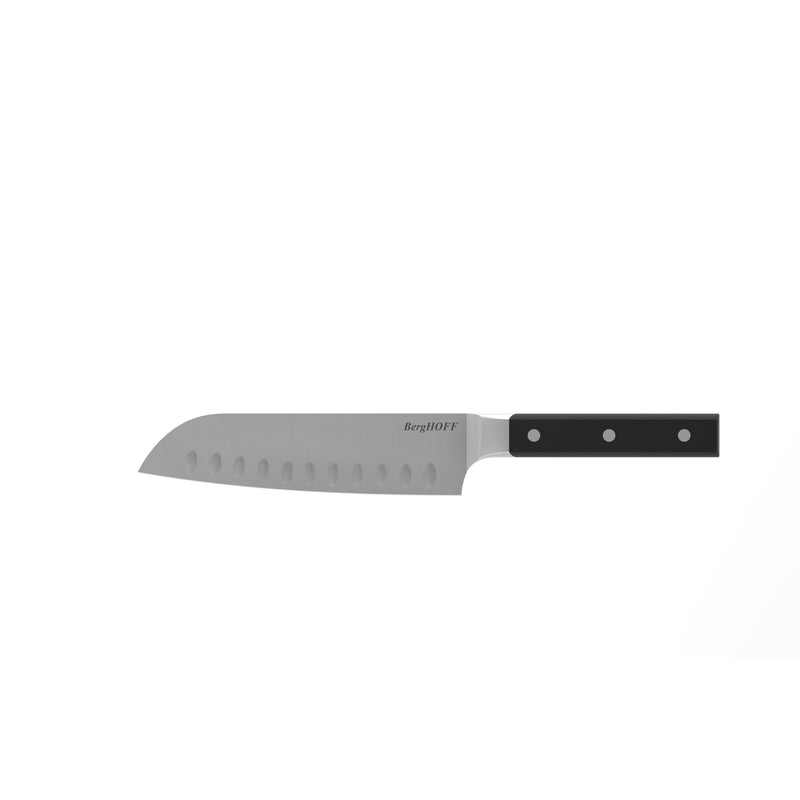
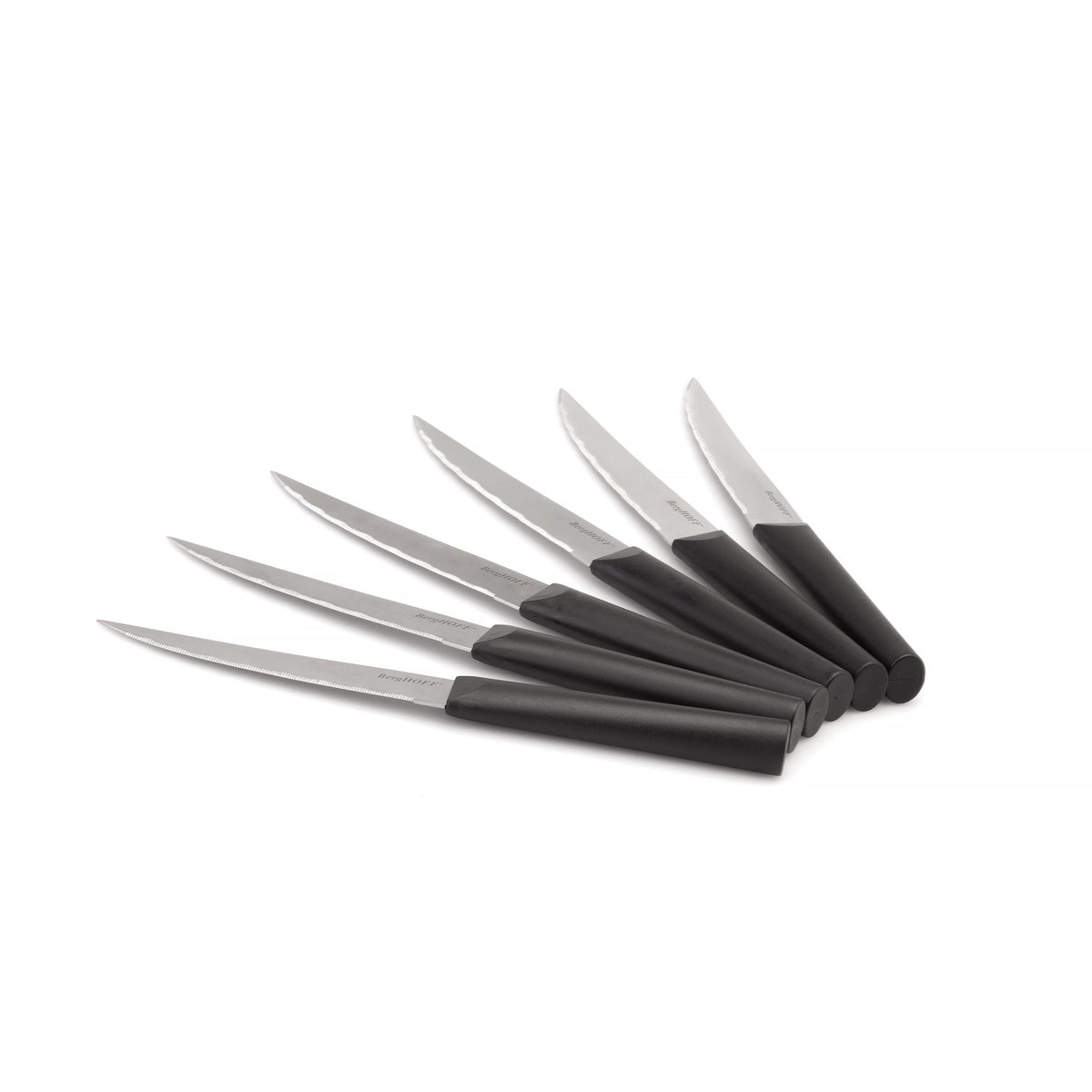
A good steak knife cuts cleanly through a seared crust without sawing, is short enough to control on a plate and stays comfortable through a whole dinner. Most blades are 11–13 cm long. The real decision is serrated or straight. A serrated edge keeps biting for years without sharpening; a straight edge cuts more cleanly and leaves more juice in the meat, but needs sharpening every few months. As for how many, buy one for every chair you normally fill, which for most households means a set of six.
This guide covers how a steak knife differs from a table knife and a carving knife, what to look for in blade and handle, how to cut and care for your knives, and which of ours suits which job. The full range is in our kitchen knives collection; the other knife types are covered in our guide to kitchen knife types. BergHOFF steak and carving knives can be ordered at berghoff.lv and its sister shops berghoff.lt, berghoff.ee, berghoff.fi, berghoff.se and berghoff.dk, the official BergHOFF online stores for the Baltics and the Nordics.
Steak knife, table knife or carving knife: what is the difference?
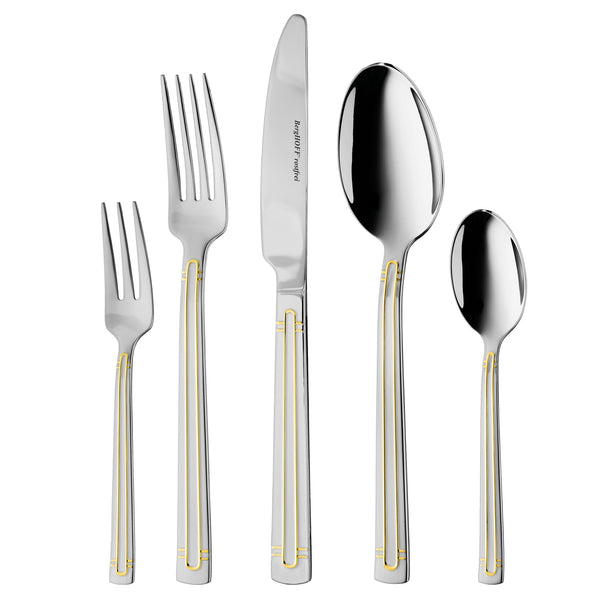
- Table knife: the knife in your cutlery set. The edge is blunt and the tip rounded, so it spreads butter and cuts fish or potatoes without scratching the plate; on a seared crust it presses rather than slices, and squeezes the juice out. Table knives come with the rest of the cutlery in our cutlery sets.
- Steak knife: a sharp, pointed knife about the size of a table knife, made for cutting cooked meat on a plate. The point goes between the bones of a chop and the edge slices without pressure.
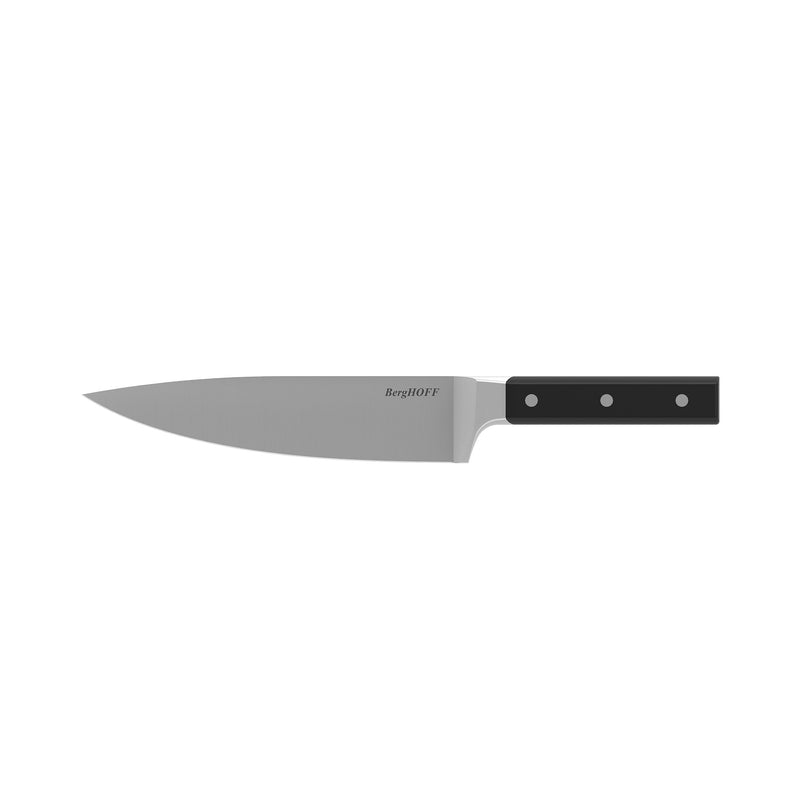
- Carving knife: a long, thin kitchen knife (ours are 19–20 cm) for slicing a roast, a ham or a turkey into even slices at the board. A carving set adds a fork that holds the joint still while you slice.
In short: carve in the kitchen, eat with a steak knife, and keep the table knives for everything that does not need a sharp edge. You will find our carving knives and sets under carving knives.
Serrated or straight edge?
Both work; they just make different trade-offs.
A serrated edge has small teeth that grip the crust and saw through it. It stays usable for years without any attention: even when the points are no longer sharp, it still gets through a steak. The downsides: the teeth tear the fibres rather than slicing them, so the cut is rougher and more juice ends up on the plate; they scratch glazed plates; and a serrated edge cannot be sharpened on a normal pull-through sharpener, so once it is blunt, it stays blunt.
A straight edge slices like a small chef's knife: the cut is clean, the meat holds its juice, and the knife is kind to your plates. The catch is maintenance: it loses its bite on ceramic plates and needs a few passes through a sharpener every few months. If you already keep your kitchen knives sharp, that is no extra effort; if your sharpener lives unused in a drawer, a serrated set will suit you better. The middle ground is a micro-serrated edge with very fine teeth, which cuts almost as cleanly as a straight edge and stays usable longer.
Blade steel and handle: what to look for
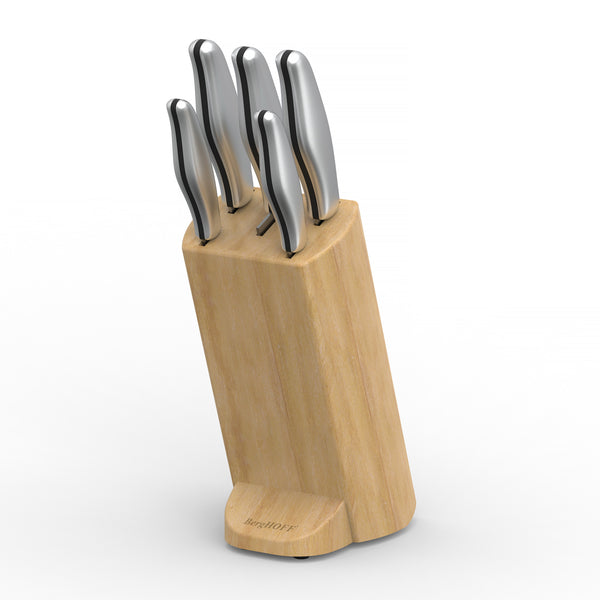
For steak knives, look for a stainless steel blade that will not stain from sauces and wine, good balance and a handle that still grips when greasy. Our Matrix 6-Piece Steak Knife Set shows what that looks like in practice: six stainless steel knives with an 11.5 cm blade, a satin finish and a polypropylene handle, balanced so the knife steers easily on the plate. It is made for steaks, pork chops and pizza.
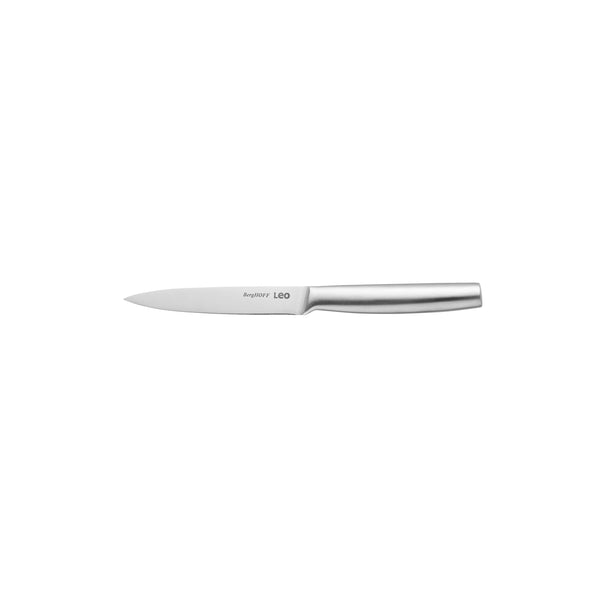
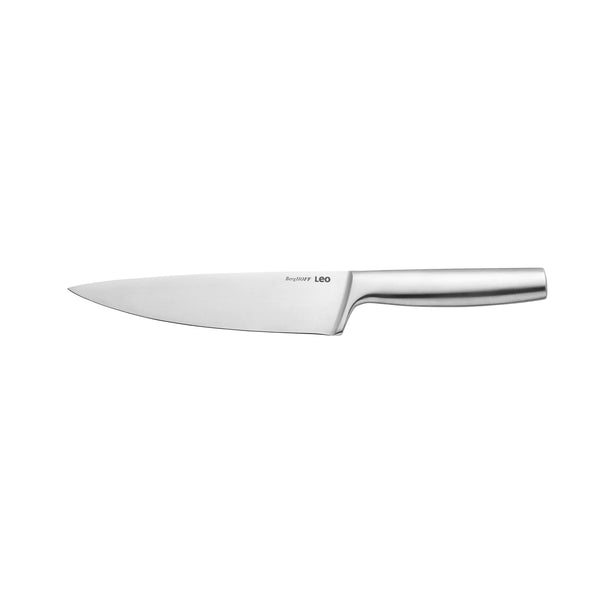
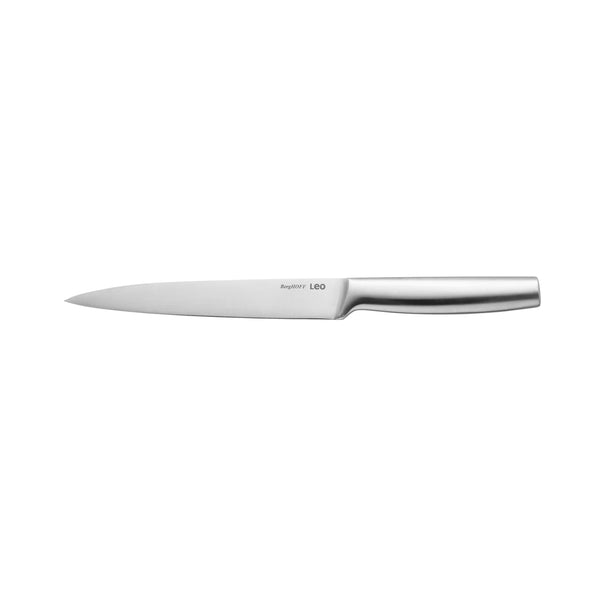
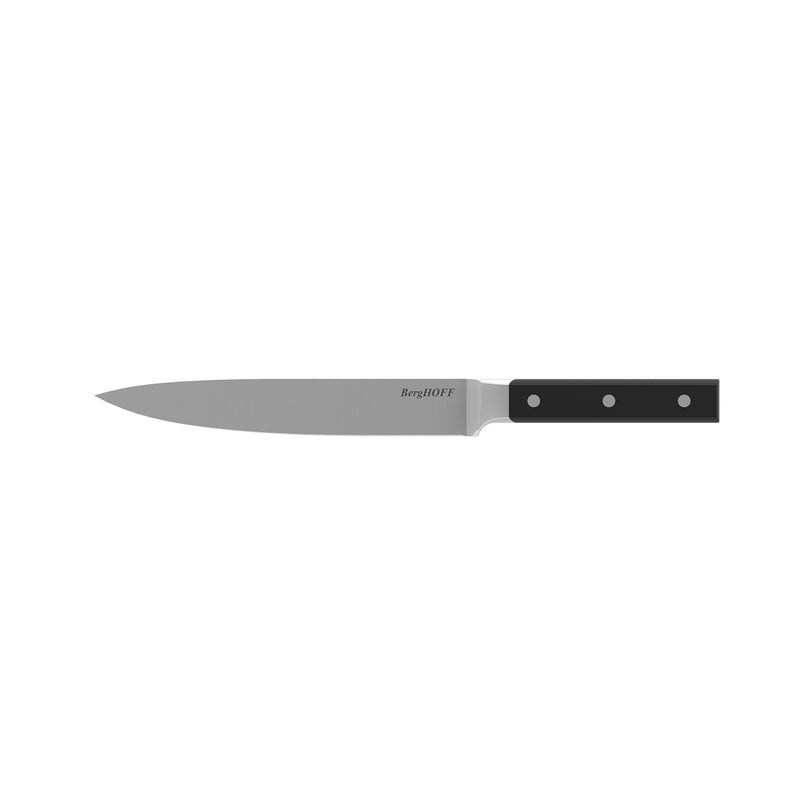
For carving knives, the blade matters more than the handle: long and thin, so it slides through a roast in one stroke and gives even slices. Our three 20 cm carving knives cover the main options: the Legacy Carving Knife 20 cm is a one-piece design with a hollow stainless steel handle and a seamless transition from blade to handle, so there is nowhere for grease to collect; the Graphite Carving Knife 20 cm pairs the same thin stainless blade with a soft-touch handle; the Gene Carving Knife 20 cm has a forged, hand-sharpened blade and a triple-riveted handle. For a Sunday joint, the Forest 2-Piece Carving Set adds a 17 cm carving fork to a 19 cm knife; its long, straight tines hold the meat and keep your hand away from the blade. All of them sit alongside chef's knives, cleavers and poultry shears among our knives for meat and fish.
How many steak knives do you need?
Count the chairs, not the steaks. A set of six covers a family dinner with a couple of guests. If you regularly seat eight or more, buy two identical sets rather than one set and a few strays. Even couples who rarely entertain do well with six: steak knives get used for chops, chicken thighs, sausages and pizza far more often than for steak.
Our steak and carving knives compared
| Product | Pieces | Blade length | Blade and handle | Care |
|---|---|---|---|---|
| Matrix 6-Piece Steak Knife Set | 6 steak knives | 11.5 cm | Stainless steel, satin finish; polypropylene handle; edge type not stated | Hand wash recommended |
| Legacy Carving Knife 20 cm | 1 carving knife | 20 cm | Stainless steel blade; seamless hollow stainless steel handle | Hand wash recommended |
| Graphite Carving Knife 20 cm | 1 carving knife | 20 cm | Stainless steel blade; soft-touch handle (ABS with stainless steel) | Hand wash recommended |
| Gene Carving Knife 20 cm | 1 carving knife | 20 cm | Forged, hand-sharpened stainless steel blade; triple-riveted ABS handle | Hand wash recommended |
| Forest 2-Piece Carving Set | Carving knife + carving fork | 19 cm knife, 17 cm fork | Stainless steel; handles made with recycled PP and recycled TPE | Hand wash recommended |
How to use a steak knife and a carving knife properly
Even the sharpest knife gives you tough slices if you cut the meat the wrong way.
- Rest the meat first. Meat cut straight off the heat loses its juice. Leave a steak for five minutes and a large joint for fifteen to twenty, loosely covered.
- Cut against the grain. Find the direction the muscle fibres run and slice across them. That shortens the fibres and makes every piece noticeably more tender; it is what turns a flank or skirt steak from chewy to excellent.
- Slice, do not press. Draw the knife through the meat in one long stroke; pushing down hard squeezes the juice out.
At the board, use a cutting board with a juice groove so the resting juices do not run onto the worktop: our Legacy 3-piece polypropylene sets and the larger Balance bamboo boards both have one, and the colour-coded Legacy set keeps raw meat on its own board. Browse them under cutting boards.
Care: keeping the edge
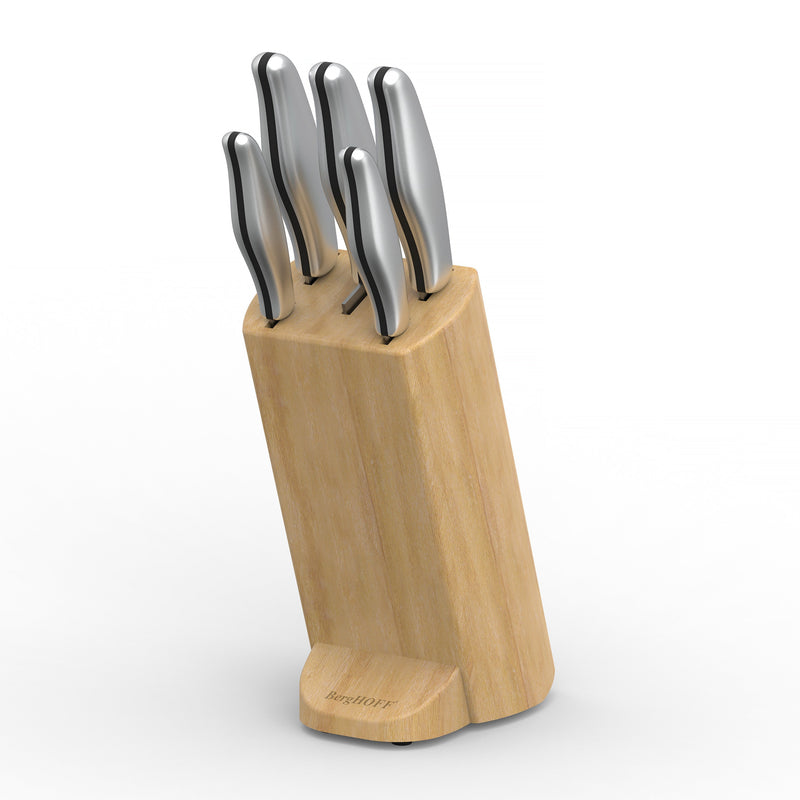
All the knives in this guide, from the Matrix steak knives to the Legacy, Graphite, Gene and Forest carving knives, are marked hand wash recommended. Wash them in warm water straight after the meal, dry them at once and store them in a block, a sheath or a drawer insert rather than loose among the other cutlery. Never leave them soaking.
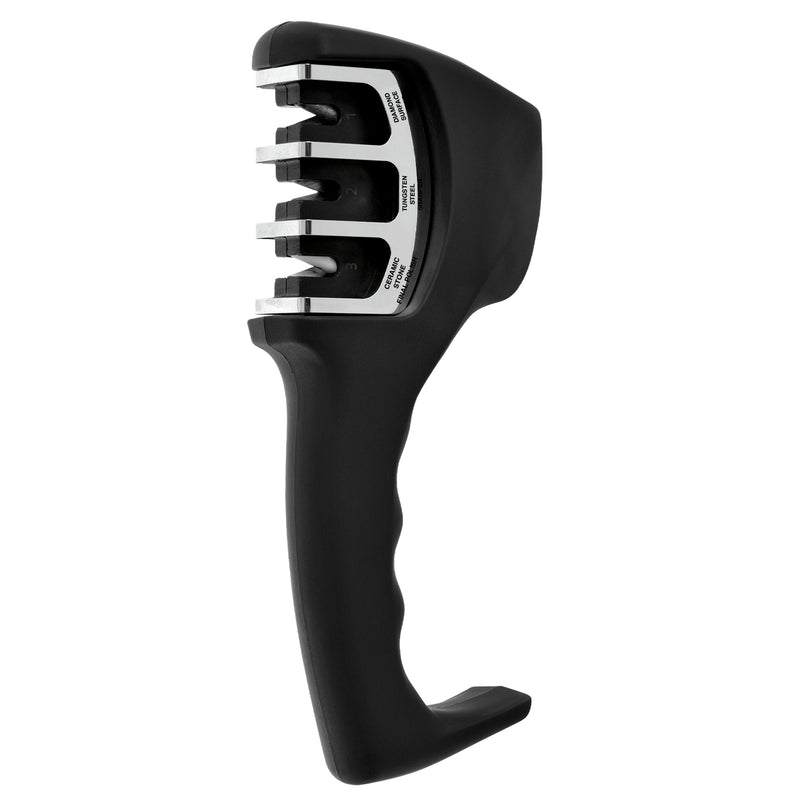
A straight-edged steak knife or a carving knife is sharpened like any other kitchen knife, and a pull-through sharpener is the simplest option: our Leo 2-Stage Knife Sharpener has a coarse slot that re-forms the edge and a fine slot that polishes it; the Essentials 3-Stage Knife Sharpener adds a diamond stage for blades that are genuinely blunt. Draw the blade from heel to tip through the slot a few times with light pressure. A carving knife needs this a couple of times a year; a straight steak knife used on ceramic plates needs it rather more often. Serrated steak knives are the exception: a pull-through sharpener would grind off the teeth. Pick one under knife sharpeners, and for whetstones and honing steels read our article on how to sharpen kitchen knives.
What are you cooking?
The knife is only half of a good steak dinner. These collections are sorted by what you are cooking:
- Steak: pans that give a proper crust, from stainless steel frying pans to a cast iron grill pan, plus tongs and meat hammers, under for steak.
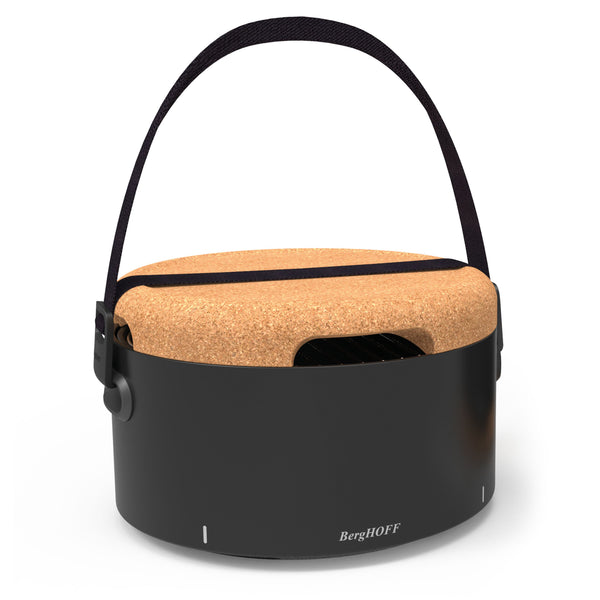
- Grilled meat and vegetables: grill pans with raised ridges, a table barbecue and long BBQ tongs under for grilling.
- Roasts, ham and turkey: a carving knife or carving set, and a board with a juice groove to slice on.
Read also: Gifts for dad who likes to cook: ideas by what he makes
Frequently asked questions
Are serrated or straight steak knives better?
Neither wins outright. Serrated knives stay usable for years without sharpening, but they tear the fibres slightly and cannot be sharpened at home; straight-edged knives cut more cleanly but need sharpening every few months. Choose serrated for zero maintenance, straight if you already keep your knives sharp.
What is the difference between a steak knife and a table knife?
A table knife has a blunt, rounded blade for spreading and soft food; a steak knife has a sharp, pointed blade that slices cooked meat without pressure. A table knife on a steak squeezes the juice out and leaves ragged pieces.
Can I use a steak knife as a carving knife?
Not well. An 11–13 cm steak knife needs several short strokes to get through a roast, so the slices come out uneven. A 19–20 cm carving knife slices a joint in one draw.
Can steak knives go in the dishwasher?
Our Matrix steak knives and all our carving knives are marked hand wash recommended, so wash them by hand, dry them straight away and store them so the edges do not touch other cutlery.
Where in the Baltics and the Nordics can I buy original BergHOFF steak knives?
Original BergHOFF steak and carving knives are available at berghoff.lv and its sister shops berghoff.lt, berghoff.ee, berghoff.fi, berghoff.se and berghoff.dk, the official BergHOFF online stores for the Baltics and the Nordics. Delivery times differ by country: orders to Latvia, Lithuania and Estonia usually arrive within 1–2 business days, and orders to Finland, Sweden and Denmark within 2–3 business days. Delivery is free for orders of €59 or more (or the equivalent in your currency), and as a consumer you can withdraw from your purchase within 14 days without giving a reason.