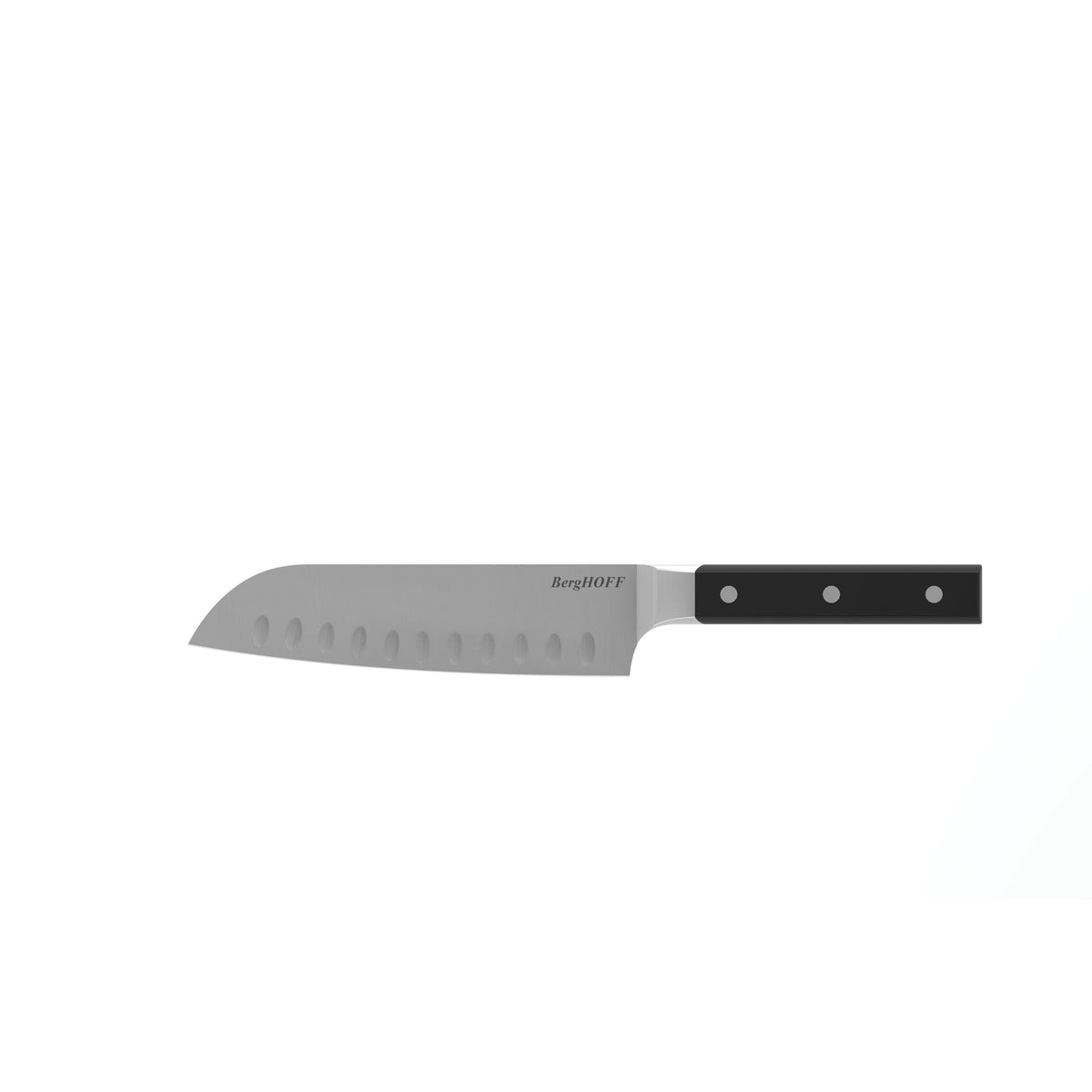
For most home cooks, a chef's knife is the safer single choice, because its longer blade and curved edge handle almost anything from herbs to a large cut of meat. Choose a santoku instead if you mostly cook with vegetables, prefer a shorter, lighter-feeling knife or like to chop straight down rather than rock the blade. Both are all-rounders, so you won't go wrong with either. The better question is which one suits the way you cut.
Both knife types are part of the BergHOFF range at berghoff.lv and its sister shops berghoff.lt, berghoff.ee, berghoff.fi, berghoff.se and berghoff.dk – the official BergHOFF online stores for the Baltics and the Nordics.
Santoku vs chef's knife: the main differences
| Feature | Santoku knife | Chef's knife |
|---|---|---|
| Typical length in our range | 11.5 to 18 cm | Mostly 20 cm |
| Blade shape | Wide, with a straighter edge | Wide, with an upward curve towards the tip |
| Cutting style | Chopping straight down, slicing | Rocking on the board, slicing, mincing |
| At its best with | Vegetables, thin even slices, smaller kitchens and boards | Big or tough ingredients, herbs, jobs that need reach |
| Also handy for | Crushing garlic, scooping up what you've chopped | Mincing, and on heavier blades, light cleaving |
What is a santoku knife?
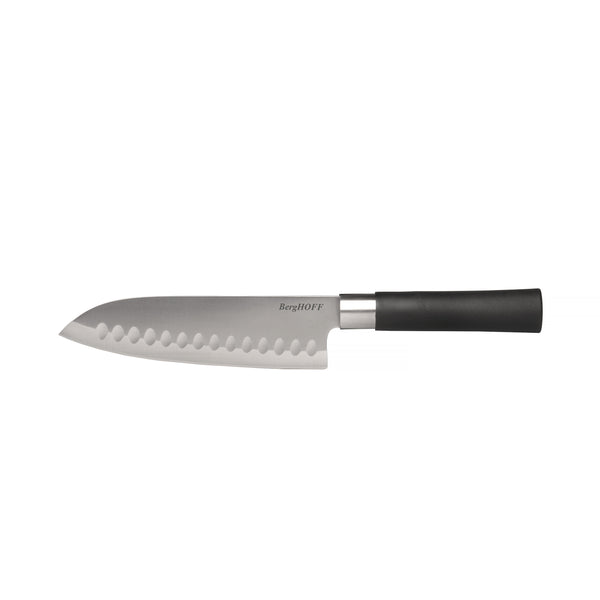
A santoku is the Japanese take on the all-purpose kitchen knife. The name is usually translated as "three virtues", a nod to how well it handles meat, fish and vegetables. Compared with a chef's knife it's shorter, and its wide blade runs fairly straight along the edge. That shape invites a simple up-and-down chop: the whole edge meets the board at once, which makes it easy to get neat, even slices of courgette, carrot or cucumber.
Our santoku knives come in sizes from a compact 11.5 cm up to 18 cm. The Gene santoku 18 cm sits at the long end, with a forged, hand-sharpened blade and a triple-riveted handle, and it's a good pick if you want one main knife that's especially quick with vegetables.
Why do some santoku blades have scallops or holes?
Many santoku knives have a row of shallow scallops along the blade, and some have holes instead. Both are there for the same reason: to stop food clinging to the steel as you cut, so you spend less time wiping slices off the blade. The Gene, Graphite and Legacy santoku knives have scalloped blades, for example, while the Codon santoku with holes 17 cm uses perforations. If you cut a lot of potatoes or other starchy, sticky vegetables, this is a detail worth looking for.
What is a chef's knife?
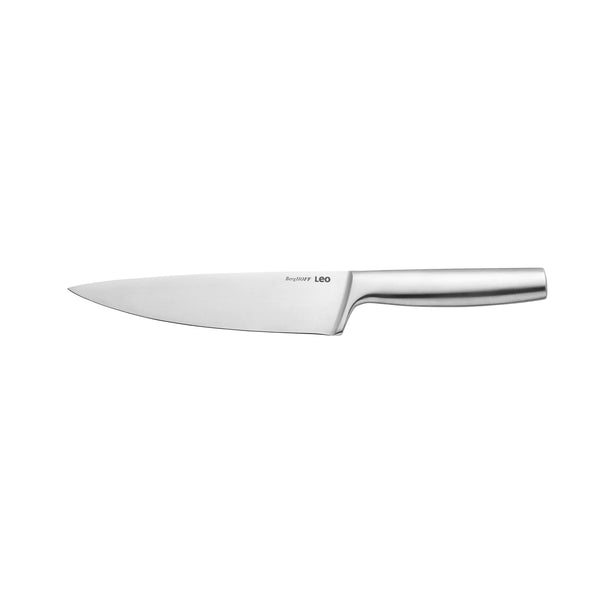
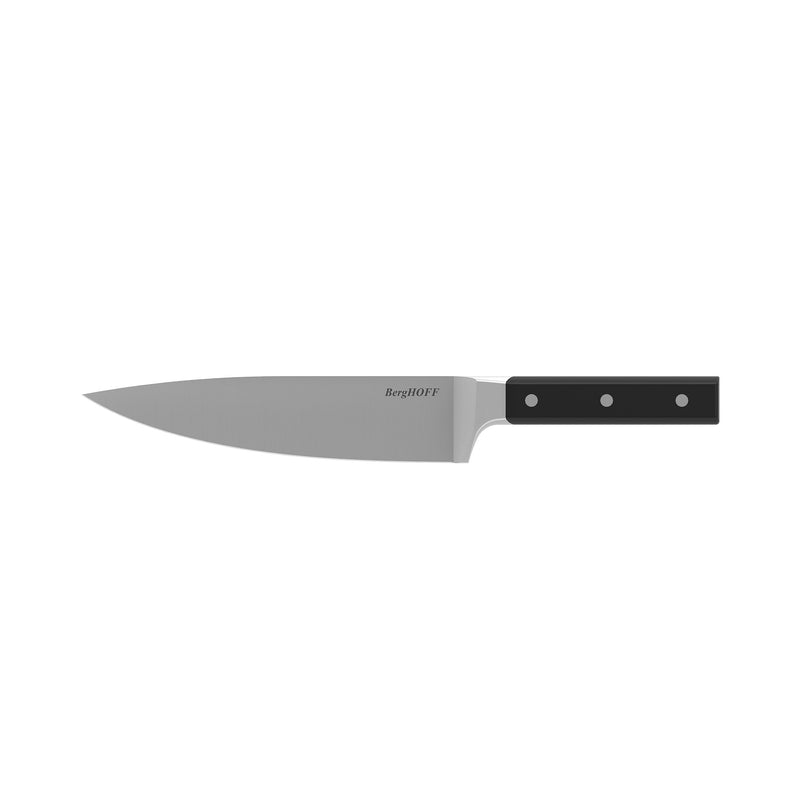
The chef's knife is the classic European all-rounder. Most are around 20 cm long, and the edge curves up towards the tip. That curve is the point: it lets you rock the blade on the board with the tip barely leaving the surface, which is a fast way to mince herbs, garlic or onions. The extra length also helps when you're halving a cabbage, slicing through a big squash or carving a roast.
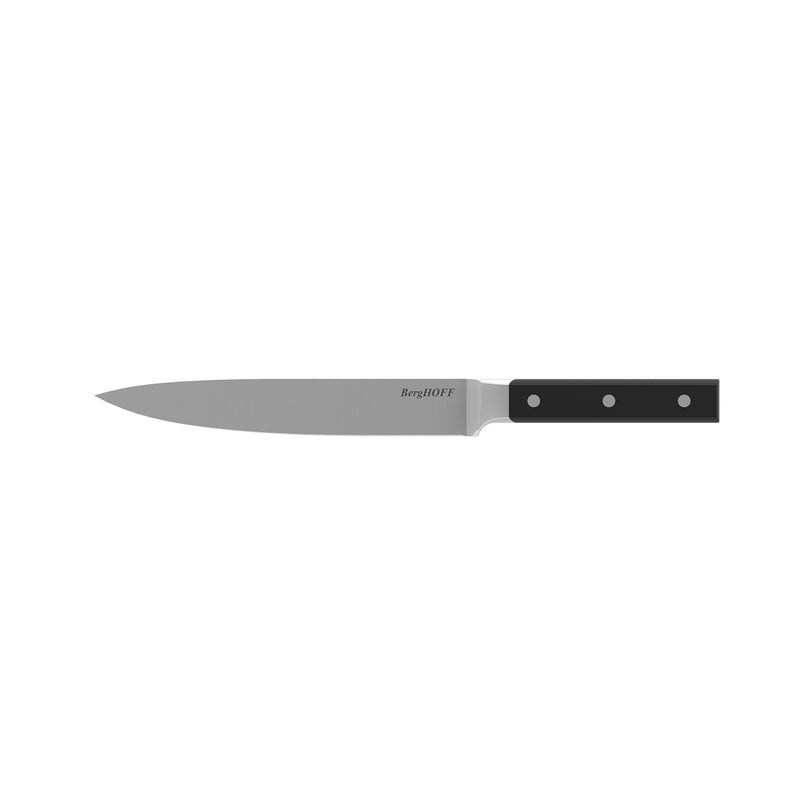
The Gene chef's knife 20 cm is a typical example, forged and hand-sharpened, with a full-length tang and a triple-riveted handle. The Graphite chef's knife has a wide, weighty blade that can also take on light cleaving. You can compare them all among our chef's knives.
Which one suits the way you cook?
Choose a santoku if
- most of your cutting is vegetables, salads and stir-fry ingredients
- you naturally chop straight down rather than rocking the knife
- a 20 cm blade feels long in your hand or on your cutting board
- you like thin, even slices
Choose a chef's knife if
- you want one knife for everything, including large joints of meat and big vegetables
- you chop a lot of herbs and like the rocking motion
- you cook for a family and work through larger quantities
- you have plenty of room on the board and are comfortable with a longer blade
Not sure which camp you're in? Think about the last few meals you made and how you held the knife. If you've never given it a thought, a chef's knife is the easier place to start, because it handles both cutting styles reasonably well.
Choosing by what you're cutting
If you'd rather start from the ingredients, these two collections bring the right tools together:
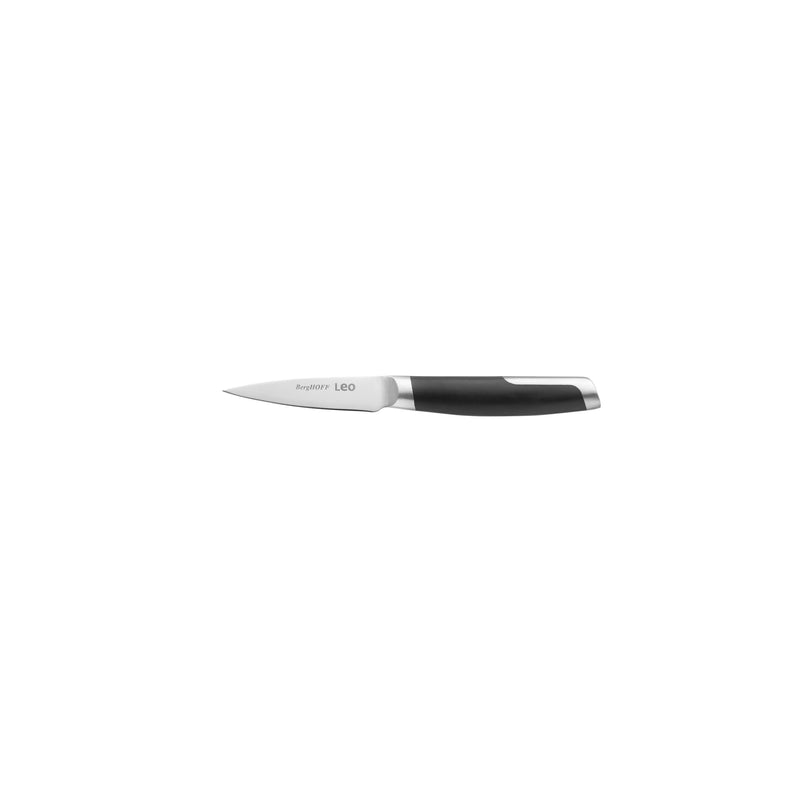
- Mainly plant-based cooking: our knives for vegetables and herbs lean towards santoku, paring and utility knives. A santoku does the bulk of the chopping, and a paring knife looks after the fiddly jobs.
- Plenty of roasts, chicken and fish: our knives for meat and fish include chef's knives, carving knives and cleavers. A 20 cm chef's knife copes with most of this work, but a carving knife takes over when you want long, clean slices.
Is it worth having both?
If you cook most days, yes. The two knives overlap a lot, but having both lets you reach for the chef's knife for big, heavy work and the santoku for quick vegetable prep. They're also a good match when two people cook together, as each can use the knife they prefer.
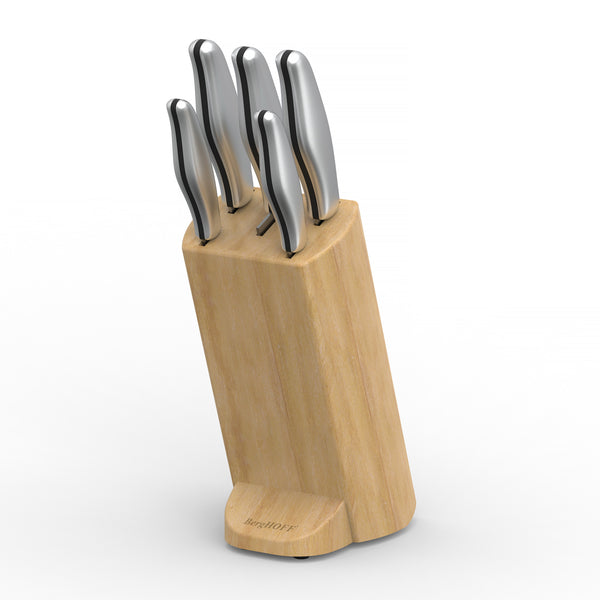
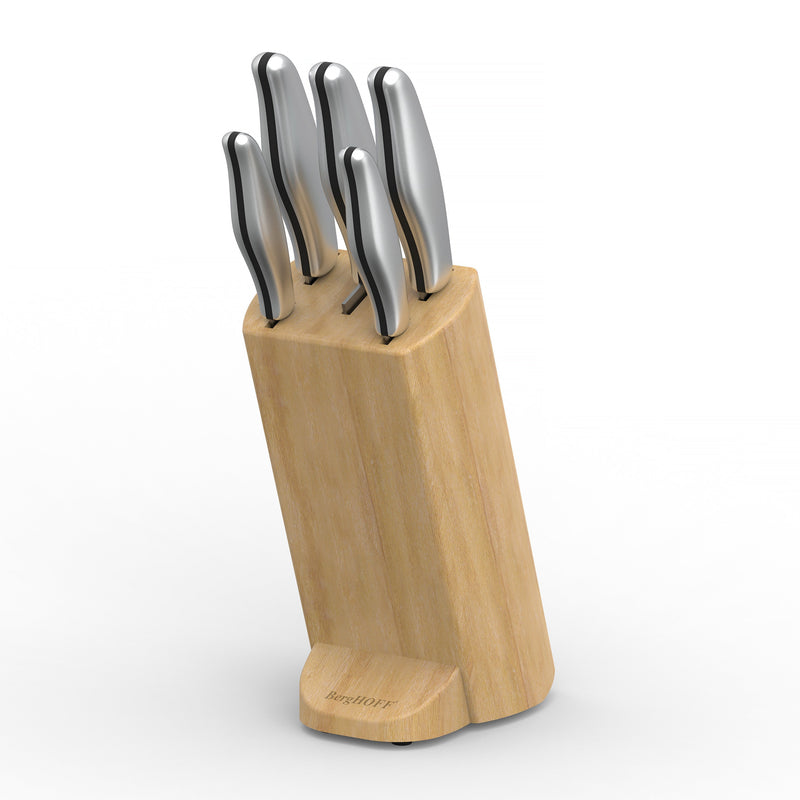
A set can be the simplest way to get there. The Forest 3-piece knife set pairs a 19 cm chef's knife with a 17 cm santoku and adds an 8.5 cm paring knife, so the everyday jobs are covered. For other combinations, take a look at our knife sets, and if you're still working out what a complete kitchen needs, our kitchen knives guide walks through every type.
Handling and care
Whichever you choose, how the knife feels matters as much as its shape. Look for a handle you can hold comfortably, and think about weight and balance as well: a heavier forged knife does some of the work for you, while a lighter one is easier to move quickly.
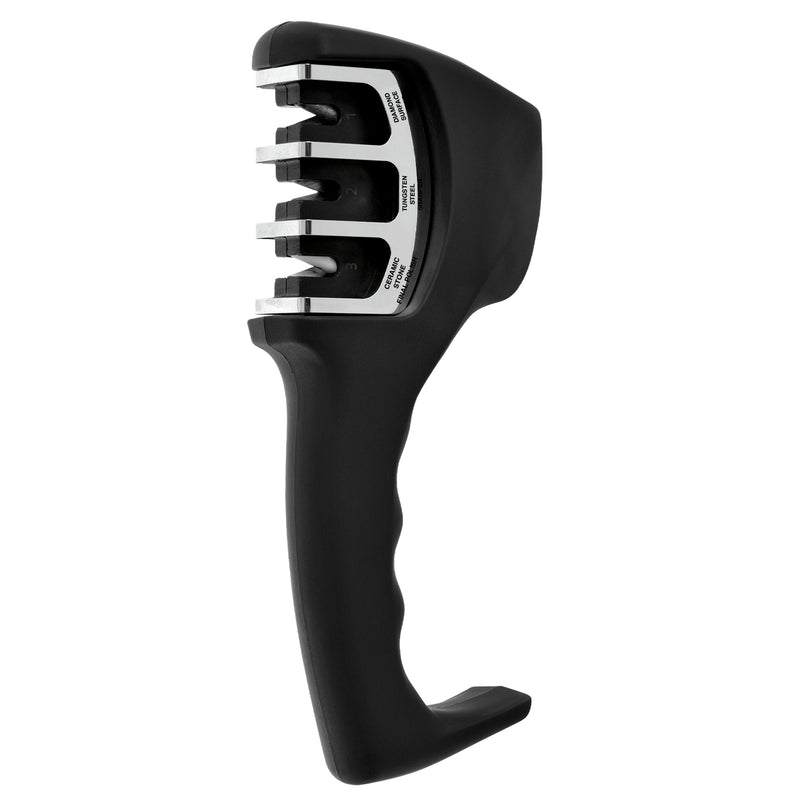
Both types need the same care. The knives mentioned here are all recommended for hand washing, so rinse and dry them after use. Keep the edge in shape too, because even the best blade dulls with use. Our guide on how to sharpen kitchen knives explains the options, from a simple sharpener to a whetstone.
Once you know which knife you're after, browse the full range of kitchen knives to see what goes with it.
Read also: Paring knife: what it's for and how to choose one
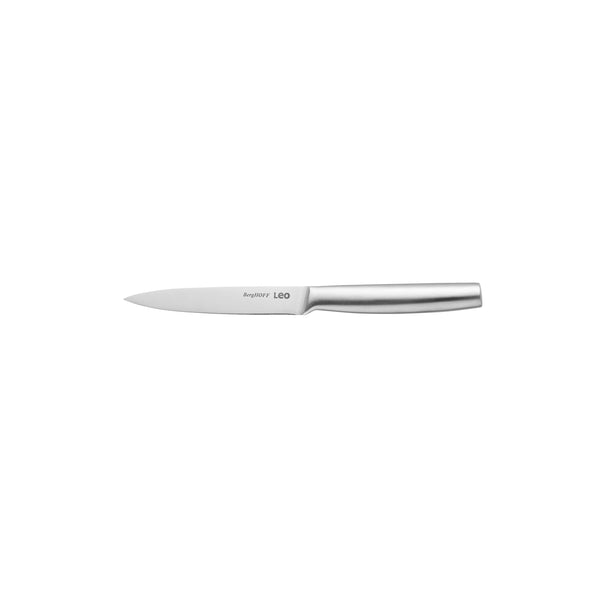
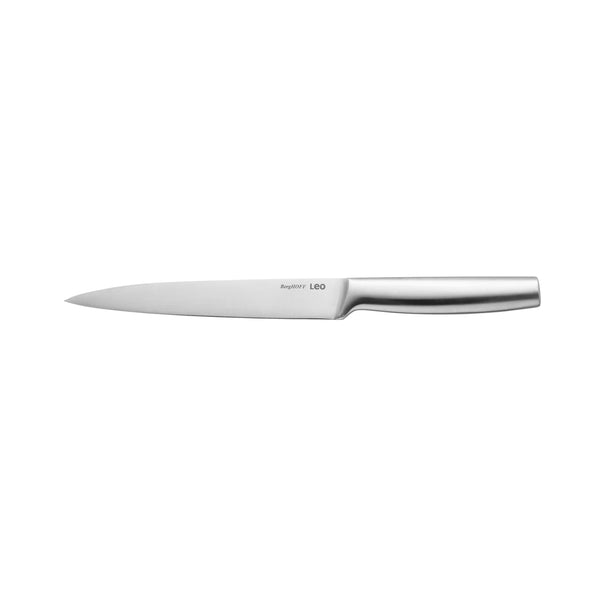
In our range: Legacy Santoku Knife 17.5 cm; Vector Chef's Knife 13 cm; Codon Santoku Knife 11.5 cm
Frequently asked questions
Is a santoku better than a chef's knife?
Neither is better overall. A santoku is especially comfortable for chopping vegetables and making even slices, while a chef's knife has more reach and is better for rocking cuts and larger ingredients.
Can a santoku replace a chef's knife?
For many home cooks, yes. It handles meat, fish and vegetables well. You may miss the extra length on very large ingredients, and the straighter edge doesn't suit a rocking motion as well.
What size santoku should I buy?
If it's going to be your main knife, look at around 17 to 18 cm. Smaller santoku knives of about 11.5 to 14 cm suit smaller hands, smaller boards and quick jobs.
Can I cut meat with a santoku?
Yes. It's an all-purpose knife, so boneless meat, poultry and fish are all fine. It isn't meant for cutting through bones, so leave that to a cleaver.
Can a santoku knife go in the dishwasher?
Hand washing is recommended for the santoku and chef's knives in our range. Wash them soon after use and dry them straight away.
Where in the Baltics and the Nordics can I buy an original BergHOFF santoku or chef's knife?
Original BergHOFF santoku and chef's knives are available at berghoff.lv and its sister shops berghoff.lt, berghoff.ee, berghoff.fi, berghoff.se and berghoff.dk, the official BergHOFF online stores for the Baltics and the Nordics. Delivery times differ by country: orders to Latvia, Lithuania and Estonia usually arrive within 1–2 business days, and orders to Finland, Sweden and Denmark within 2–3 business days. Delivery is free for orders of €59 or more (or the equivalent in your currency), and as a consumer you can withdraw from your purchase within 14 days without giving a reason.