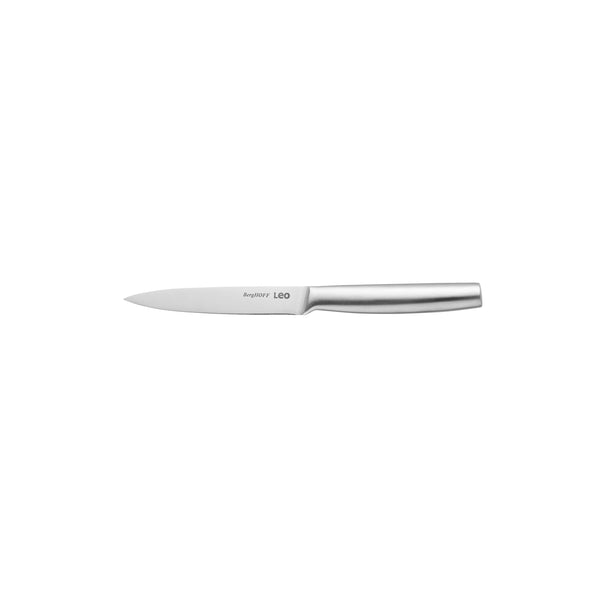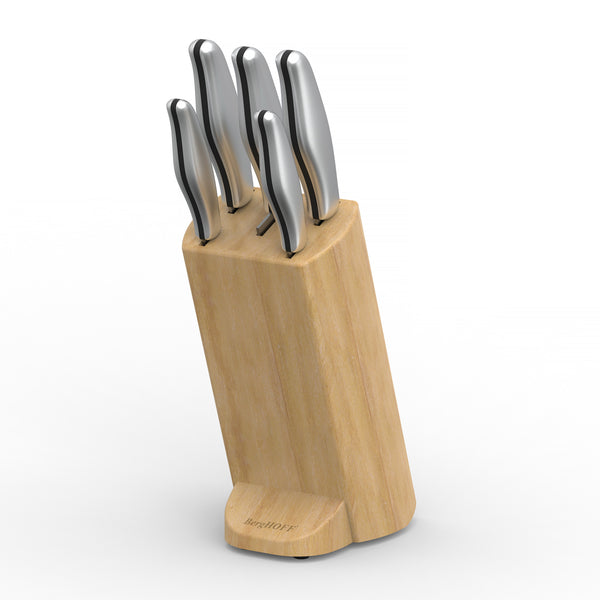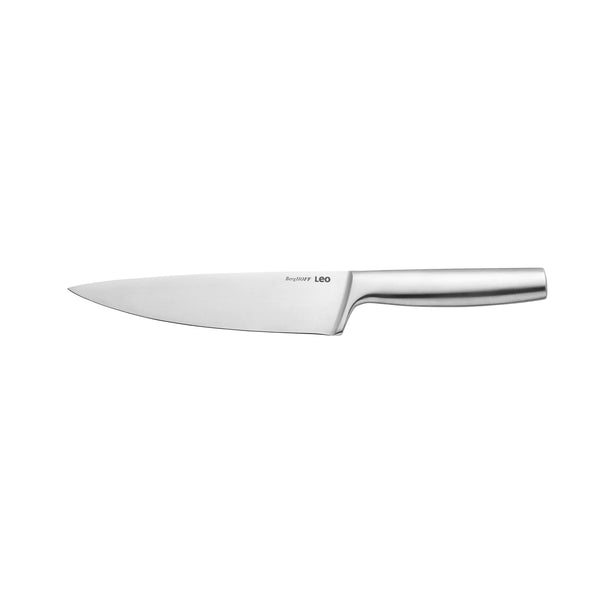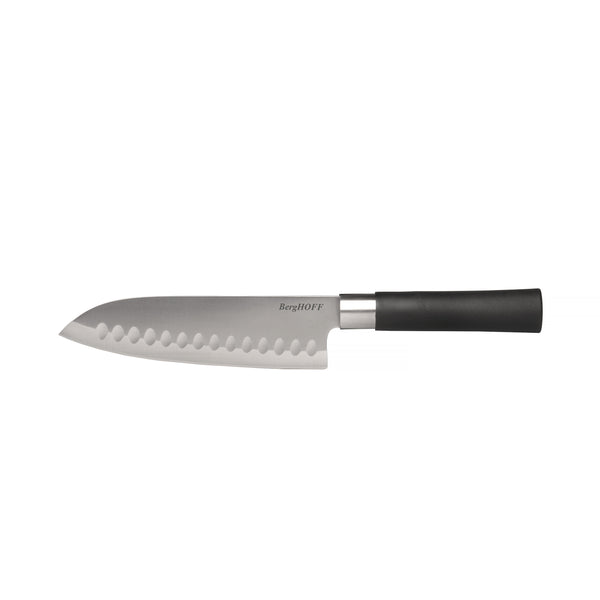
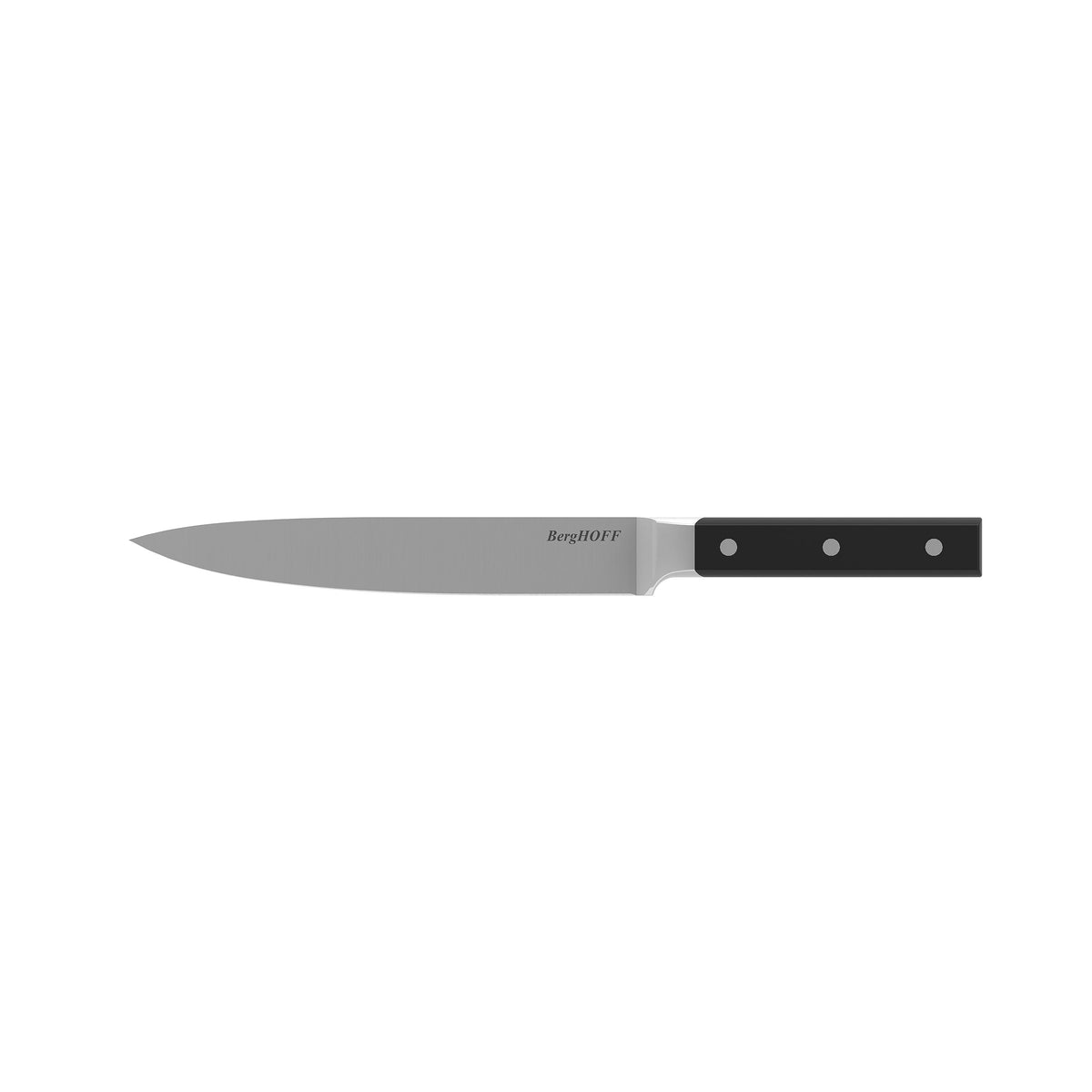
A good carving knife has a long, narrow and thin blade, usually around 20 cm, with a plain (not serrated) edge, so it can slice cooked meat in one smooth stroke without tearing it. Pair it with a two-pronged carving fork to hold the roast steady, let the meat rest before you start, and always cut across the grain. That is really all it takes to serve a Sunday roast, a glazed ham or a Christmas turkey in neat, even slices.
This guide covers what sets a carving knife apart from a chef's or bread knife, what to look for when you buy one, how the BergHOFF carving knives compare, and how to carve step by step. Every knife mentioned here is available from berghoff.lv and its sister shops berghoff.lt, .ee, .fi, .se and .dk, the official BergHOFF online stores in the Baltics and the Nordics.
What is a carving knife, and how is it different from other knives?
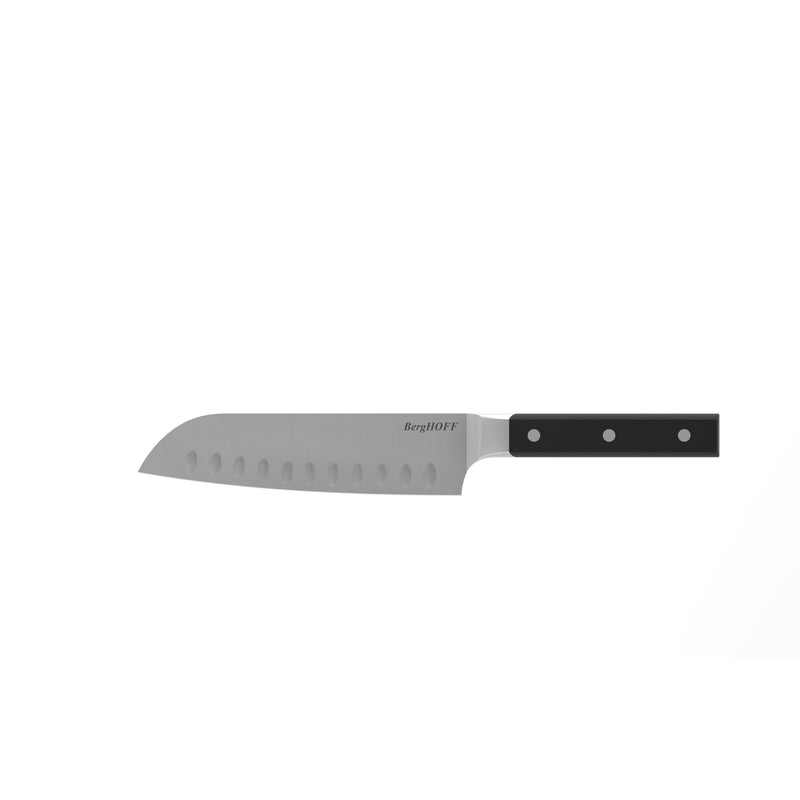
A carving knife is made for one job: slicing large pieces of cooked meat. The long blade lets you draw the knife through a joint in a single stroke instead of sawing back and forth, and the narrow profile creates less drag, so slices come away clean rather than ragged. Most carving knives also have a pointed tip that lets you work around bones and joints.
| Knife | Blade | Best for | Carving? |
|---|---|---|---|
| Carving knife | Long, narrow, thin, plain edge, pointed tip | Roasts, ham, poultry, cold cuts | Yes, this is its job |
| Chef's knife | Wide, heavier, curved edge | Chopping, dicing, everyday prep | Possible, but slices are thicker and less even |
| Bread knife | Long, serrated | Bread, cakes, soft-skinned fruit | Tears cooked meat and leaves ragged slices |
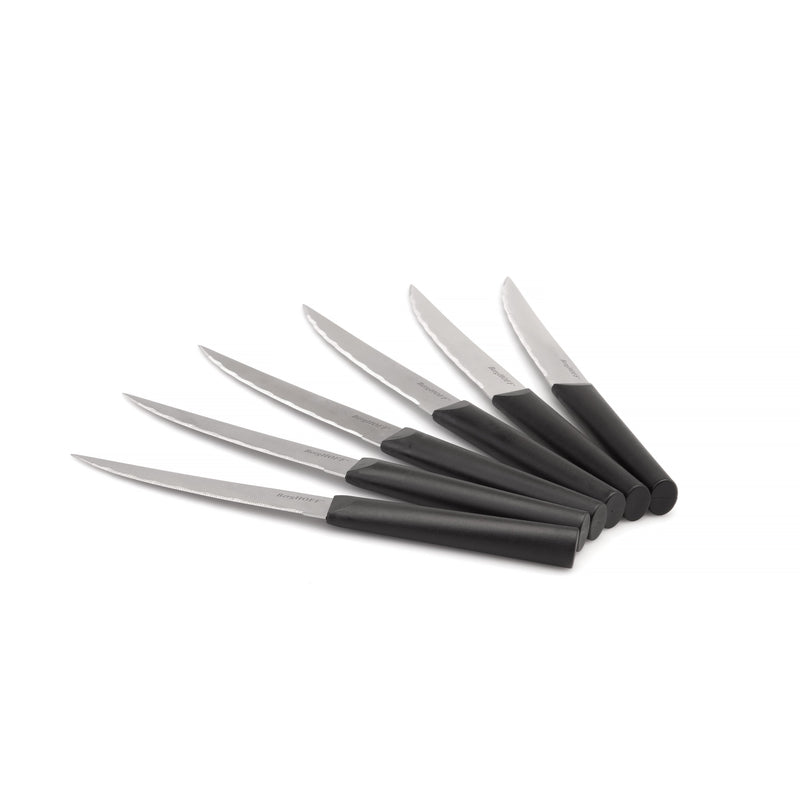
| Steak knife | Short, often serrated | Cutting meat on your plate | Too short for a whole joint |
| Cleaver | Wide, heavy, rectangular | Raw meat, chopping through bones | No, too heavy for neat slices |
If you are still building a basic set, our kitchen knives guide explains which knives you really need. For the knife that does the work at the table, see the steak knives guide.
How to choose a carving knife
Blade length
For most homes, a blade of about 19–21 cm is the sweet spot. It is long enough to cross a whole chicken or a pork loin in one stroke, yet still easy to control. A very large turkey or a whole ham is easier with the longer end of that range, but technique matters more than an extra centimetre or two.
A thin, sharp, plain edge
A thin blade glides through meat with less pressure. A plain edge gives smooth, clean slices, and it is also easier to sharpen at home than a serrated one. Some carving knives have small hollows along the side of the blade to help slices fall away; they can help, but a sharp, thin blade matters far more.
Forged or stamped
A forged blade is shaped from a single piece of heated steel. It tends to feel heavier and more solid in the hand, and usually has a thicker section, or bolster, where the blade meets the handle. A stamped blade is cut from a sheet of steel and is lighter. Both carve well; choose the one that feels best to you.
Handle and balance
You will often carve with the knife held at a shallow angle for several minutes, so a comfortable grip matters. A riveted handle feels classic and solid, a soft-touch handle sits comfortably in the hand, and a one-piece stainless steel knife is easy to keep clean.
A carving fork
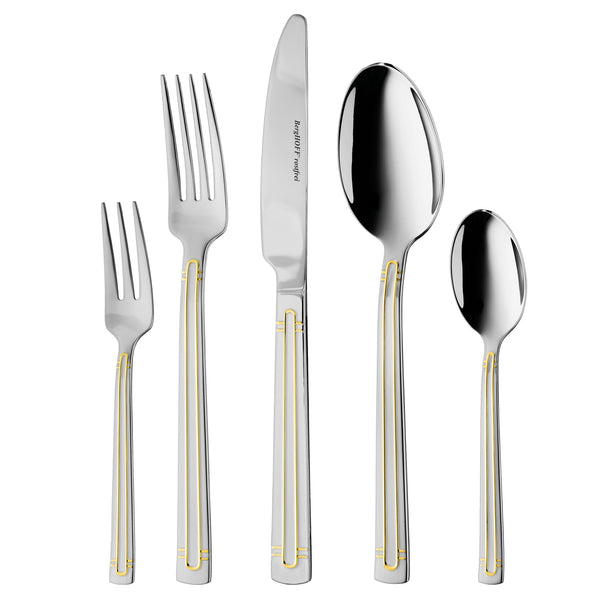
A carving fork has two long, straight tines that pin the meat to the board while you slice, which keeps your free hand well away from the blade. It is also the easiest way to lift the slices onto a serving dish. If you carve a roast more than a few times a year, a matching carving set is worth it.
BergHOFF carving knives compared
There are four products in the carving knives collection: three single knives and one carving set with a fork.
| Legacy 20 cm | Graphite 20 cm | Gene 20 cm | Forest 2-piece set | |
|---|---|---|---|---|
| Blade | Stainless steel, 20 cm | Stainless steel, 20 cm | Forged stainless steel, hand-sharpened, 20 cm | Stainless steel, 19 cm |
| Handle | Hollow stainless steel, seamless with the blade | Soft-touch handle (ABS with stainless steel) | Triple-riveted ABS handle | Recycled PP and recycled TPE |
| Carving fork | No | No | No | Yes, 17 cm with two tines |
| Weight (net) | 0.27 kg | 0.24 kg | 0.31 kg | 0.38 kg (knife and fork) |
| Care | Handwashing recommended for all four | |||
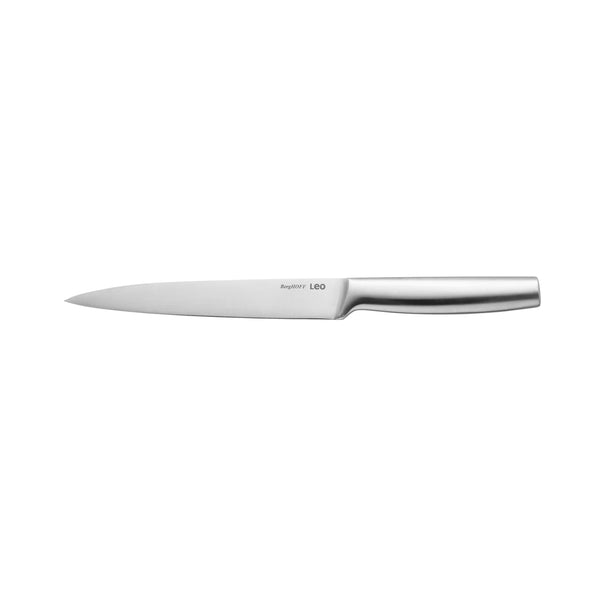
- Legacy: a sleek all-steel knife with no joins where dirt can collect. It matches the Legacy knife block, so it suits you if you already own Legacy knives.
- Graphite: the lightest of the three, well balanced, with a soft-touch handle that fits comfortably in the hand.
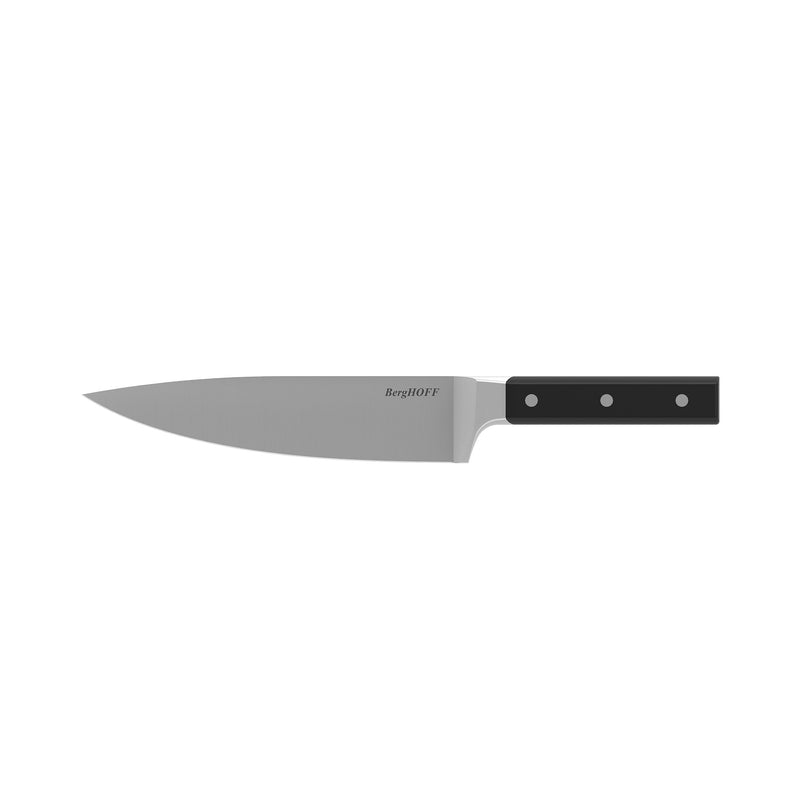
- Gene: a forged, hand-sharpened blade and a classic triple-riveted handle. The Gene Carving Knife 20 cm is the one to choose if you like a weightier, more traditional knife.
- Forest: the only option that comes with a carving fork. The Forest 2-Piece Carving Set pairs a 19 cm knife with a 17 cm fork whose long tines keep your hand clear of the blade.
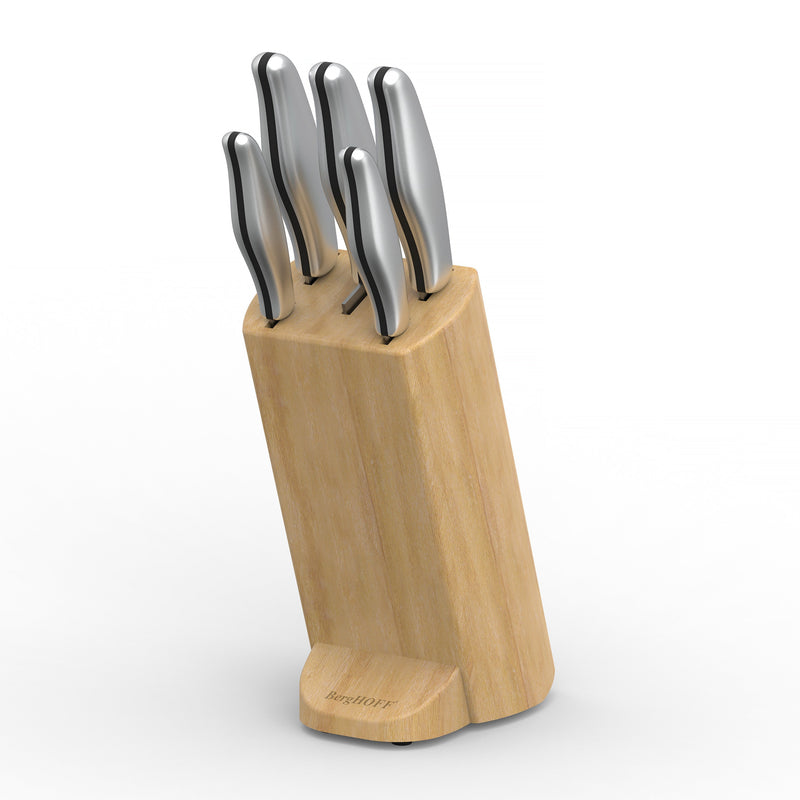
A carving knife also comes in most block sets in the knife sets collection, including the Glints 5-piece set, the Forest 6-piece block with built-in sharpener, the Frame 8-piece block with poultry shears, the Legacy 11-piece block with three cutting boards, and the Graphite 13-piece block with poultry shears and six steak knives. The Codon 3-piece set combines a 21 cm carving knife with two santoku knives.
How to carve a roast, ham and poultry
Before you start
- Let the meat rest. Give a roast at least 10–15 minutes under loose foil, and a large turkey a bit longer. The juices settle, so they stay in the meat instead of running all over the board.
- Use a large, stable board with a juice groove, and put a damp cloth underneath so it does not slide.
- Check the edge. A blunt carving knife squashes and tears meat. A few strokes on a sharpener just before you start make a real difference.
Roast beef, pork or lamb
- Find the direction of the grain, meaning the lines of muscle fibre running through the meat.
- Hold the joint steady with the carving fork, inserted away from where you will slice.
- Cut across the grain in long, even strokes, using the full length of the blade and as little downward pressure as possible.
- For a bone-in leg of lamb or a rib roast, cut along the bone first to free the meat, then slice.
Ham
Set the ham on its flattest side, or cut a thin slice off the bottom to create one. Slice down towards the bone in thin slices, then cut along the bone horizontally to release them. Long, gentle strokes give the neatest results.
Chicken and turkey
- Cut through the skin between the leg and the body, pull the leg outwards and cut through the joint. Separate the drumstick from the thigh.
- Remove the wings at the joint in the same way.
- For the breast, either slice it straight down in thin slices while it is still on the bird, or cut the whole breast away along the breastbone and slice it across on the board, which gives neater pieces.
Poultry shears make the joints much easier. The Graphite Poultry Shears 25 cm, for example, have forged blades that cut through poultry bones and joints, and they come apart for cleaning.
Sharpening and care
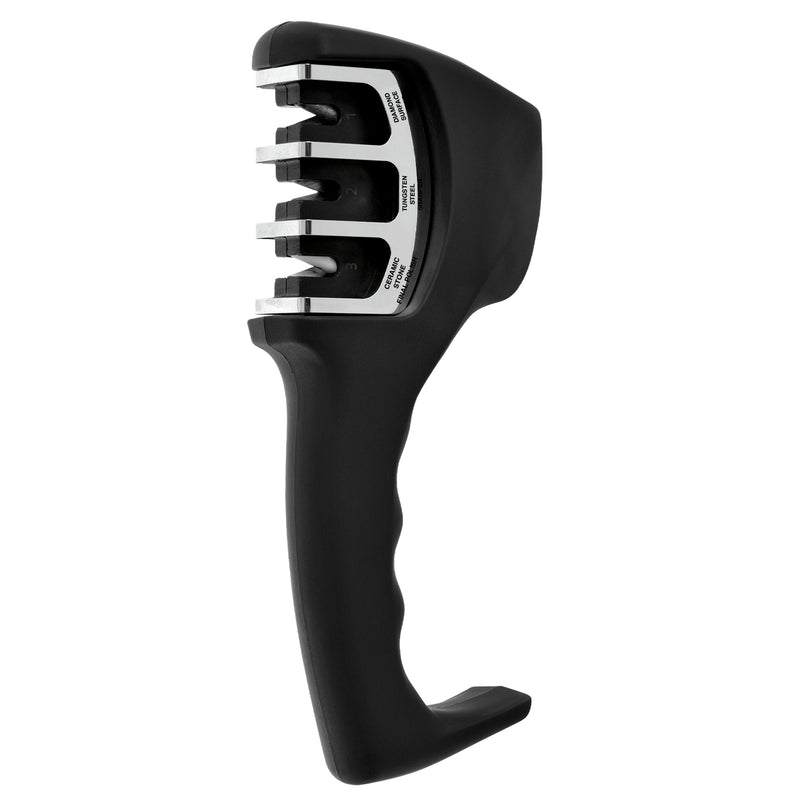
Carving knives tend to come out only a few times a year, so they are easy to forget until the big day. Give the edge a quick touch-up before each carving session, and sharpen it properly as soon as slicing starts to take effort. The knife sharpeners include the Leo 2-stage pull-through sharpener with a coarse and a fine slot, and the Essentials 3-stage sharpener with diamond, tungsten steel and ceramic stages. Our guide on how to sharpen kitchen knives explains the technique.
- Wash the knife by hand straight after use and dry it at once. This is recommended for all BergHOFF carving knives.
- Carve on wood, bamboo or plastic, never on a plate, a metal tray or a glass or stone board, all of which blunt the edge in no time.
- Store the knife in a block or a blade guard rather than loose in a drawer.
The Legacy 3-piece cutting board sets have a juice groove and go in the dishwasher, while the large Balance bamboo board (45 × 41 cm) has a juice groove and an anti-slip border. You will find both among the cutting boards, and our cutting board guide helps you choose.
What are you cutting?
- Roasts, poultry and fish: carving knives, chef's knives, cleavers and poultry shears in knives for meat and fish.
- Bread and cakes: the serrated blades in knives for bread and cakes handle crusts and soft sponges that a carving knife would squash.
In our range: Essentials 8-Piece Knife Block Set
FAQ
What size carving knife should I buy?
A blade of about 19–21 cm suits most households. It handles everything from a roast chicken to a turkey or a ham, and it is still manageable on an average chopping board.
Do I need a carving fork?
It is not essential, but it helps a lot. A carving fork holds hot meat steady, keeps your fingers away from the blade and lets you move slices to the serving dish. BergHOFF does not sell the fork on its own; it comes in the Forest 2-Piece Carving Set.
Can I use a chef's knife or a bread knife instead?
A sharp chef's knife will do the job in a pinch, but its wider, heavier blade gives thicker, less even slices. A bread knife's serrated edge tears cooked meat, so it is best kept for bread and cake.
Can a carving knife go in the dishwasher?
Handwashing is recommended for all four BergHOFF carving products. The dishwasher dulls edges faster, and knives can knock against other items in the basket.
Where can I buy an original BergHOFF carving knife?
Order one from berghoff.lv, the official BergHOFF online store in Latvia, or from its sister shops berghoff.lt, berghoff.ee, berghoff.fi, berghoff.se and berghoff.dk. Orders in Latvia, Lithuania and Estonia are usually delivered within 1–2 business days of order confirmation, while standard delivery to Finland, Sweden and Denmark usually takes 2–3 business days. Delivery is free on orders of €59 or more (or the equivalent in your currency), and you have 14 days to withdraw from your purchase without giving a reason.