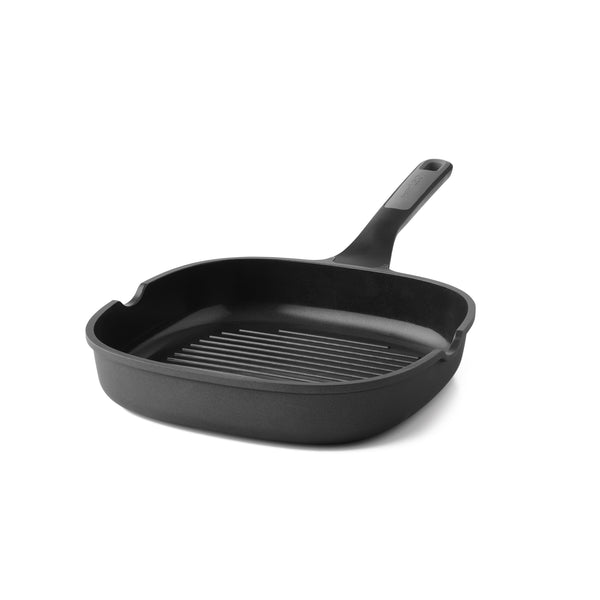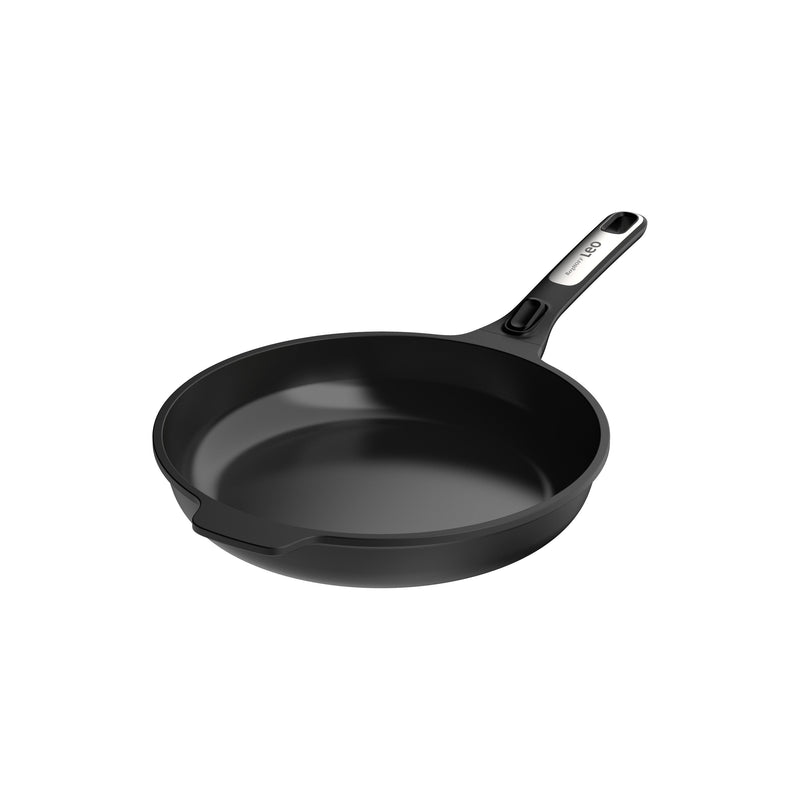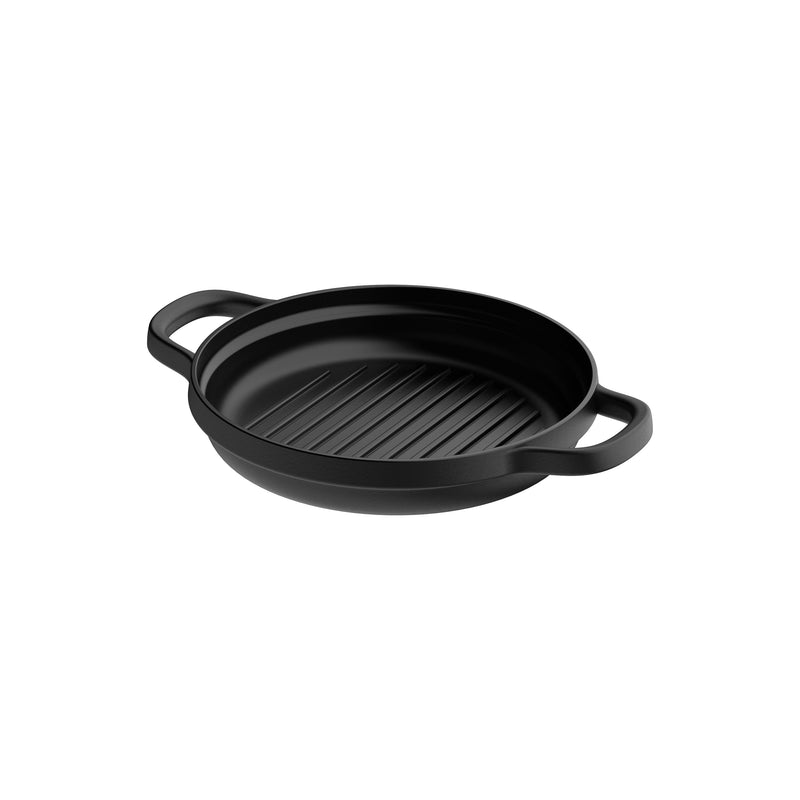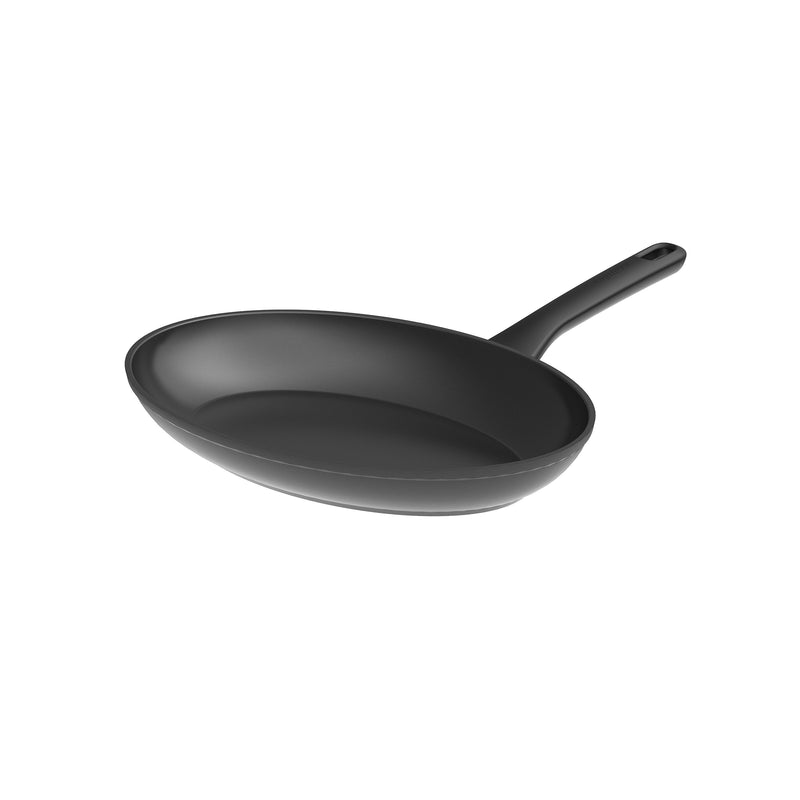

To clean a stainless steel pan, let it cool a little, soak it in warm soapy water and scrub with a non-scratch sponge, then dry it straight away. For burnt-on food, simmer water and a spoonful of baking soda in the pan and scrape the residue loose with a wooden spatula. Rainbow marks and white spots come off with a splash of white vinegar. Avoid steel wool and chlorine bleach, and never plunge a hot pan into cold water.
Stainless steel is one of the easiest materials to look after. There is no coating to protect, so you can scrub harder than you would with a non-stick pan, and even a pan that looks ruined can usually be rescued. The pans mentioned here are sold at berghoff.lv, the official BergHOFF online store in Latvia, and at its sister shops berghoff.lt, .ee, .fi, .se and .dk.
Everyday cleaning in five steps
Most of the time a stainless steel pan needs nothing more than this:
- Let it cool for a few minutes. A pan that is still very hot can warp if cold water hits it, and the steam can burn your hand.
- Loosen what is left. Pour in warm water while the pan is still warm and leave it for ten minutes or so. Stuck bits soften on their own.
- Wash with washing-up liquid and a sponge, a nylon scourer or a dish brush. Work in circles over the base and up the sides.
- Rinse well, including the outside of the base, where splashes of fat tend to collect.
- Dry it at once with a tea towel. Drying is what keeps the pan shiny: water left to evaporate leaves limescale spots.
If something has stuck but is not actually burnt, the quickest trick is to fill the pan with a few centimetres of water and bring it to the boil for a minute or two. The residue lifts and comes away easily with a spatula.
How to clean a burnt stainless steel pan
Burnt sugar, a forgotten sauce, rice welded to the base: it looks hopeless, but stainless steel can take it. Start with the gentlest method and work up.
1. Baking soda and boiling water
Cover the burnt area with water, add one or two tablespoons of baking soda and bring it to a gentle boil. Let it simmer for about ten minutes, then turn off the heat and scrape the base with a wooden or silicone spatula while the water is still warm. Most burnt food comes off in flakes. Pour the water away, wash as usual and repeat if needed.
2. Baking soda paste
For stubborn patches, mix baking soda with a little water into a thick paste. Spread it over the dry burnt area, leave it for a quarter of an hour and scrub with a nylon scourer. Baking soda is a mild abrasive, so it cleans without scratching a polished surface, unlike a metal scouring pad.
3. Vinegar and baking soda for the worst cases
Pour in enough water to cover the base, add a cup of white vinegar and bring it to the boil. Take the pan off the heat and stir in two tablespoons of baking soda, a little at a time, as it foams up. Once it settles, pour the liquid away and scrub.
4. A cleaning powder for stainless steel
If brown, baked-on marks are still there, use a cleaning powder made for stainless steel (usually based on oxalic acid). Make a paste, rub it in with a damp sponge in the direction of the polish lines, rinse thoroughly and wash with soap and water afterwards. Wear gloves and follow the instructions on the pack.
Deglazing: clean as you cook
The brown film left after searing meat is not dirt yet, it is flavour. While the pan is still hot, pour in a splash of wine, stock or water and scrape the base with a wooden spoon. You get the start of a pan sauce, and the pan is half clean before you have even served.
Discolouration and stains: what they mean and how to remove them
Marks on stainless steel are rarely a sign that the pan is damaged. Here is what each one is and what removes it.
| What you see | Why it happens | How to remove it |
|---|---|---|
| Rainbow, blue or golden sheen | Heat tint: the surface layer reacts to high heat, often on an empty or overheated pan | Wipe with white vinegar on a soft cloth, or boil a little diluted vinegar in the pan, then rinse and dry |
| White, chalky spots or rings | Limescale from hard water, or starch from boiled pasta and potatoes | Boil one part white vinegar to three parts water in the pan, let it cool, wash and dry |
| Brown or yellowish film | A thin layer of oil that has baked on at high heat | Baking soda paste or a cleaning powder for stainless steel |
| Black, burnt patches | Food or sugar that has carbonised | Baking soda simmer, then a paste; repeat as needed |
| Small dark pits in the base | Salt added to cold water and left to sit (pitting) | Cannot be polished out; they do not affect cooking |
Heat tint is purely cosmetic and harmless. To prevent it, avoid heating an empty pan on full power for long and do not use the boost setting on an induction hob with nothing in the pan.
What to avoid
- Steel wool and metal scouring pads on polished surfaces. They leave fine scratches on mirror and satin finishes and can leave tiny steel particles that later show up as rust spots.
- Chlorine bleach and oven cleaner. They can stain and pit stainless steel. Never mix bleach with vinegar or other acids.
- Thermal shock. Cold water on a very hot pan can warp the base, and a warped pan no longer sits flat on an induction or ceramic hob.
- Salt in cold water. Add salt once the water is boiling and stir it in, so it dissolves instead of settling on the base.
- Soaking for days. A few hours is plenty. Leaving acidic food or salty water in the pan overnight invites stains.
- Air drying. It is the most common reason a shiny pan turns dull and spotty.
Can stainless steel pans go in the dishwasher?
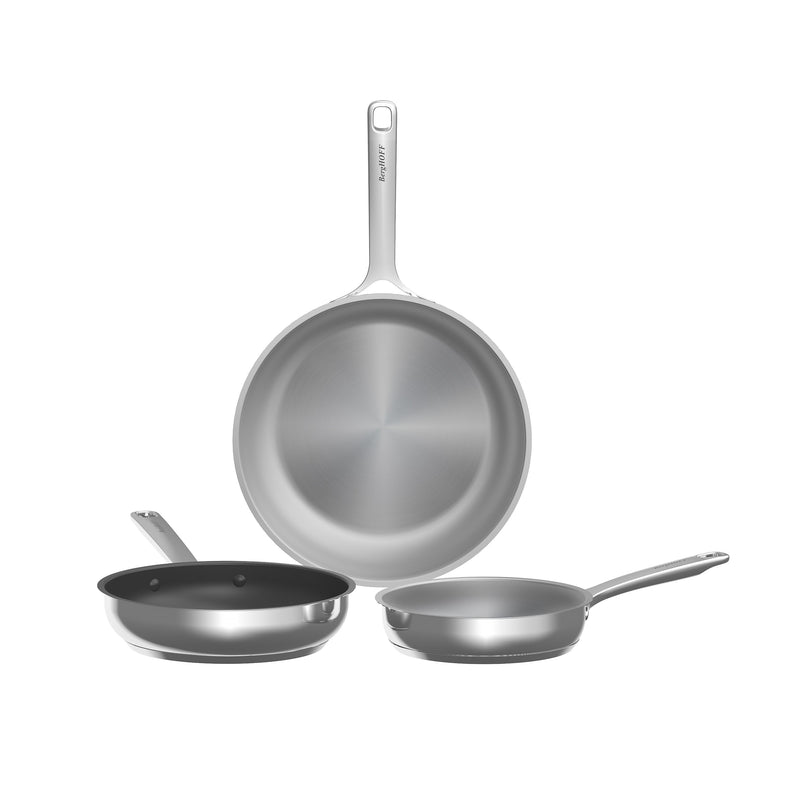
Many can, but check the care information for your pan first, especially older pans or pans with wooden or plastic handles. The BergHOFF Helix and Graphite stainless steel frying pans are listed as dishwasher safe, as is the Helix covered sauté pan 28 cm. If you have the Helix 3-piece set that combines two stainless steel pans with one non-stick pan, only the stainless steel pans go in the dishwasher; wash the non-stick one by hand.
Even so, a quick wash by hand keeps a pan shinier for longer: dishwasher detergent and hard water slowly dull the surface and leave white marks, which a vinegar rinse removes. And the dishwasher will not shift badly burnt food, so treat that with baking soda first.
Cleaning the outside and the base
Fat spatters on the outside and bakes on over time into a brown, sticky film. Wipe the outside every time you wash the pan, and every few weeks give it a baking soda paste with a soft sponge. On a mirror-finish exterior, like that of the Helix Stainless Steel Frying Pan 24 cm, use only soft sponges or cloths and finish by buffing it dry, so you do not end up with fine scratches or water marks. Keep the underside clean too: burnt residue on the base can scratch a glass hob and stops the pan sitting flat.
How to keep food from sticking next time
A pan that sticks less is a pan that needs less scrubbing. Stainless steel has no coating, so the trick is in the heat:
- Preheat the empty pan over medium heat for two to three minutes. Flick in a few drops of water: if they roll around the pan like little balls, it is hot enough.
- Then add the oil, let it heat for a few seconds and add the food.
- Pat meat and fish dry. Wet food sticks and steams instead of browning.
- Do not move it too early. Meat sticks at first and releases on its own once a crust has formed.
- Use medium heat for eggs, plenty of butter, and patience; or keep a non-stick pan for them.
The Graphite Stainless Steel Frying Pan 24 cm has a special surface treatment for easier food release and cleaning, and both the Helix and Graphite pans have a capsuled base that spreads heat evenly, which helps against hot spots where food burns. If you are still deciding whether stainless steel suits the way you cook, read our comparison stainless steel vs non-stick frying pan or the guide on how to choose a frying pan.
Which pan for what you cook
Plenty of scrubbing can be avoided by using the right pan for the job:
- Steak, chops and chicken: a hot stainless steel pan gives the best crust and deglazes into a sauce. See pans for steak.
- Eggs and omelettes: doable in stainless steel with care, effortless in non-stick. See pans for eggs and omelettes.
- Sauces, risotto and one-pan dinners: a deep pan with a lid, from our sauté pans.
- Soups, stews and pasta: the same cleaning tips work for stainless steel pots.
Browse all stainless steel frying pans or the full range of frying pans, or pick up two or three sizes at once from the pan sets.
FAQ
Can I use steel wool on a stainless steel pan?
It is best not to. Steel wool scratches polished and mirror finishes, and leftover steel fibres can rust on the surface. Use baking soda, a nylon scourer or a cleaning powder made for stainless steel instead.
Why does my stainless steel pan have rainbow stains?
That is heat tint, a thin coloured layer that forms when the steel gets very hot. It is harmless and wipes off with white vinegar. Heating the pan on medium rather than full power prevents it.
How do I get burnt oil off a stainless steel pan?
Simmer water with baking soda in the pan, scrape with a wooden spatula, then scrub the remaining brown film with a baking soda paste. For very old, baked-on oil, a cleaning powder for stainless steel works best.
Can a badly burnt stainless steel pan be saved?
Almost always. Repeat the baking soda simmer a few times, then use a paste or a stainless steel cleaning powder. Only a warped base or deep pitting means it is time for a new pan.